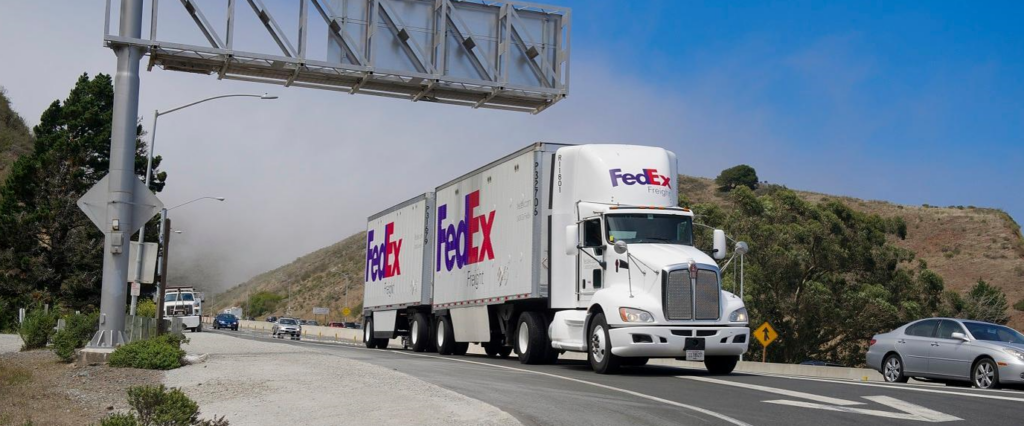
FedEx Freight has officially stepped out on its own and it’s already making promises to shareholders and shippers alike.
The largest less-than-truckload (LTL) carrier in the United States posted its first earnings report as an independent, publicly traded company on June 25, 2026, just weeks after completing its spinoff from FedEx Corporation on June 1. Trading on the New York Stock Exchange under the ticker FDXF, the company is now charting its own course and its early targets suggest confident momentum.
Q4 Revenue Beats Expectations
For the fiscal fourth quarter ending May 31, 2026, FedEx Freight reported revenue of $2.4 billion, a 4.8% increase year over year. Higher fuel surcharges and heavier average shipment weights contributed to the growth, with revenue per shipment reaching $415.22 — up 11.5%.
However, the quarter wasn’t without pressure. Adjusted operating income fell 24% to $363 million, weighed down by separation costs, lower shipment volumes, increased wage rates, and the absence of a one-time terminal sale that boosted prior-year results. Average daily shipments dipped 5.9% to 86,700.
For the full fiscal year, revenue came in at $8.8 billion, a slight 1.1% decline compared to the prior year.
What’s Ahead: Growth Guidance for H2 2026
The real news came from management’s forward-looking guidance. For the seven-month transition period from June 1 through December 31, 2026, FedEx Freight is projecting:
- Revenue growth of 4% to 6% compared to the same period last year
- Adjusted operating margin of 9% to 9.5%, up from 7.8% in fiscal year 2025
- Adjusted EPS of $2.40 to $2.60, excluding spinoff-related costs
These numbers reflect a company leaning into an industrial recovery. About two-thirds of FedEx Freight’s revenue comes from the manufacturing sector, where demand has picked up over the past five months.
Analyst Stephanie Moore of Jefferies noted that FedEx Freight currently holds roughly 30% spare network capacity, positioning it to absorb additional freight volume as the industrial economy strengthens without needing major new infrastructure investment.
A Long Time Coming: The Spinoff Story
The separation wasn’t a sudden move. FedEx announced its intent to split off its freight unit back in December 2024, with the goal of creating two focused, independently managed public companies.
Under the terms of the deal, FedEx distributed 80.1% of FedEx Freight shares to existing FedEx shareholders on a pro rata basis — one FDXF share for every two FDX shares held. FedEx retained a 19.9% stake, which it plans to divest within 24 months, largely through debt repayment. In fact, FedEx Corp. announced it would use $4.1 billion in cash provided by FedEx Freight under the separation agreement to reduce its own debt load.
At its April 2026 investor day in New York, FedEx Freight laid out medium-term targets: compound annual revenue growth of 4% to 6% and adjusted operating income growth of 10% to 12%, with the operating margin eventually climbing from around 12% to 15% over the near term.
What Makes FedEx Freight a Stand-Out LTL Player
With a 17% U.S. LTL market share, 355 service centers, more than 26,000 service center doors, and a fleet of roughly 30,000 vehicles, FedEx Freight is in a league of its own among pure-play LTL carriers. It competes directly with XPO Logistics, Old Dominion Freight Line, and Saia.
Analysts had long argued that FedEx Freight’s value was obscured inside the larger FedEx empire. As a standalone entity, its assets can now be evaluated — and priced — on their own merits. At its recent trading price near $156, the market has assigned an implied equity value of over $22 billion to the company.
The company has also been building out its sales capabilities. FedEx Freight now has more than 500 dedicated LTL sales representatives actively targeting small and mid-sized shippers — a segment that typically generates higher margins. Key growth verticals include healthcare, grocery, and the fast-expanding energy and data center sector.
Separately, management confirmed the company has successfully unwound 99% of its bundled pricing agreements with customers who previously used both FedEx parcel and freight services — clearing a significant operational hurdle from the spinoff transition.
Stock Performance and Investor Sentiment
FedEx Freight’s investor presentation on June 25 got off to a rocky start — a technical glitch delayed the virtual analyst briefing. The stock dipped close to 2% during the trading session and was down 1.2% in after-hours trading, settling at $156.68 per share. Still, that’s a gain from its June 1 opening price of $149.53, suggesting investors remain cautiously optimistic.
Why This Matters for Shippers
For shippers relying on LTL services, the FedEx Freight spinoff is more than a Wall Street story. An independent FedEx Freight has a sharper commercial focus, a dedicated sales force, and financial incentives to compete aggressively on service and pricing. That’s good news for businesses that move freight by the pallet rather than the full truckload.
The company’s emphasis on manufacturing and industrial verticals also signals where it sees the most near-term opportunity, making it a carrier to watch closely as the broader freight market works through its current cycle.