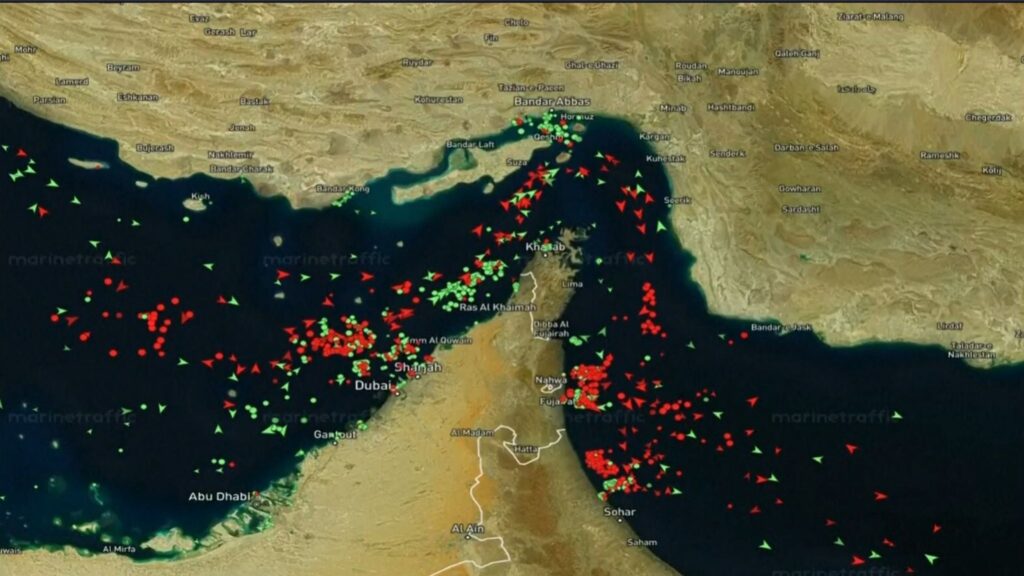
After nearly four months of disrupted oil flows, soaring freight rates, and stranded vessels, the world’s most critical maritime chokepoint is set to reopen and the global freight market is bracing for a bumpy recovery.
The Deal: What Was Agreed
On June 14, 2026, President Donald Trump announced that the United States and Iran had reached a framework agreement to end the military conflict that began on February 28, 2026. The deal — confirmed by Iran’s deputy Foreign Minister Kazem Gharibabadi — will be formally signed on June 19, and marks the end of a conflict that throttled nearly a fifth of the world’s daily oil supply.
According to Al Jazeera, Trump declared toll-free shipping through the Strait would begin immediately upon signing. On Truth Social, the president wrote: “The Deal with the Islamic Republic of Iran is now complete. Ships of the World, start your engines.”
Key terms of the memorandum of understanding include:
- Immediate and permanent termination of military operations on all fronts
- US naval blockade lifted within 30 days of signing
- $24 billion in frozen Iranian assets to be released
- Sanctions on Iranian oil suspended
- A 60-day window to negotiate a permanent settlement covering Iran’s nuclear program
Pakistan’s Prime Minister Shehbaz Sharif, who played a key mediation role, confirmed on X that pre-implementation technical talks will begin this week ahead of the signing ceremony.
Why the Strait of Hormuz Matters for Global Freight
The Strait of Hormuz is a 33-kilometer-wide passage connecting the Persian Gulf to the Gulf of Oman — and it is arguably the single most important maritime chokepoint on Earth.
According to UNCTAD’s rapid analysis published in March 2026, the strait carries:
- ~20–25% of global seaborne oil trade
- Significant volumes of liquefied natural gas (LNG)
- Critical shipments of fertilizers and petrochemicals
When conflict escalated on February 28, the consequences were immediate. Brent crude surged above $90 per barrel, war risk insurance premiums multiplied, and tanker traffic through the strait plunged by as much as 90%, according to the University of Wisconsin Law School’s Strait of Hormuz critical analysis.
The exposure was highly uneven across trading nations:
- China imports roughly 40% of its crude through the strait
- Japan routes 70% of its Middle Eastern crude through Hormuz
- Europe received 12–14% of its LNG from Qatar through the strait before the closure
How Freight Markets Were Hit
The closure sent shockwaves across every major freight segment.
Container Shipping
According to ESS Feed’s analysis, the conflict created what the industry called a “Hormuz effect”: a simultaneous cost and capacity shock not seen since the pandemic. Spot rates on key lanes surged dramatically:
- Shanghai–Los Angeles: up 59% since late February
- Shanghai–New York: up 129% since late February
Major carriers including Maersk and Hapag-Lloyd reported hundreds of millions of dollars in additional monthly fuel costs and introduced emergency recovery charges. The Mediterranean trade experienced some of the most volatile swings, as shippers scrambled to manage the twin blockades of the Red Sea and the Strait of Hormuz simultaneously.
The market entered peak-like conditions as early as May — a dramatic departure from the typical spring lull — as shippers pulled forward demand to lock in capacity.
Tanker and Oil Freight
S&P Global Commodity Insights reported that tanker freight rates jumped sharply from the moment hostilities began:
- Persian Gulf–China rate (270,000 mt crude): up 82%
- Persian Gulf–Mediterranean rate (140,000 mt crude): up 29%
- Insurance costs for vessels transiting the region: more than doubled
Gulf News noted that even in the final days before the peace announcement, tanker freight rates jumped a further 24% as electronic interference near Iran’s Bandar Abbas port disrupted navigation systems.
Bunker Fuel and Energy Costs
The conflict pushed bunker prices sharply higher heading into the peak shipping season, squeezing carrier margins and hitting every shipping segment. Brent crude tested levels near $100–$110 per barrel at peak disruption, according to Carra Globe’s analysis.
Fertilizers and Agricultural Supply Chains
The disruption extended well beyond energy. Shipping of fertilizers and chemicals through the Gulf was severely curtailed, creating fears of agricultural supply shortages in downstream markets. The situation was serious enough that President Trump temporarily suspended the Jones Act, allowing foreign-flagged vessels to move gas and fertilizer between Gulf Coast producers and northeast markets — an extraordinary emergency measure.
What Happens Next: The Road to Recovery
The peace deal is welcome news for shippers — but the freight industry should not expect an overnight return to normal.
Mine clearance is the critical near-term bottleneck. Thousands of mines laid in the Persian Gulf during the conflict must be cleared before the strait is safe for commercial traffic. The G7 summit on Monday is expected to address this directly, with Britain and France both expressing interest in assisting demining operations. The formal US naval blockade will not be lifted for up to 30 days after the June 19 signing.
Shipping analyst Lars Jensen offered a sober assessment of the timeline: “A full return to pre-crisis normality will likely take two to three months. Not just because vessel rotations need to be altered, but we also need to see empty return patterns normalized. Plus, there will be cargo ready to ship into the Gulf which has been waiting elsewhere for a few months until an opening happened. This can create a surge problem and associated bottleneck issues.”
What to expect in the weeks ahead:
- Cargo backlog surge: Thousands of vessels that have been waiting outside the Gulf or diverting via the Cape of Good Hope will begin repositioning. This will initially create bottlenecks and a demand surge on port capacity across the region.
- Rate volatility: Freight rates are unlikely to drop immediately. With significant backlogs and repositioning underway, expect continued volatility — and potentially a short-term spike — before normalization.
- Bunker price relief: As oil supply resumes from the Gulf, bunker fuel costs should ease over weeks, providing gradual relief on operating costs for carriers.
- Insurance recalibration: War risk premiums will remain elevated until the strait is fully demined and commercial transits are proven safe, likely taking several weeks beyond the formal signing.
- Supply chain restocking: Asian importers — particularly China, Japan, and South Korea — will race to replenish depleted crude stockpiles, sustaining high tanker demand even as rates begin to ease.
Global Reaction
World leaders have broadly welcomed the announcement. British Prime Minister Keir Starmer called it “a hugely important step forward in ensuring regional stability and re-opening the Strait of Hormuz” and pledged support for the technical talks ahead. Japan’s Prime Minister Sanae Takaichi expressed hope that the agreement would ensure “free and safe navigation” and that a final settlement on Iran’s nuclear program would follow.
The deal will also be a major topic at the G7 Summit on Monday, where demining coordination and the logistics of restoring commercial shipping will be high on the agenda.
For freight market participants — shippers, forwarders, carriers, and procurement teams — the reopening of the Strait of Hormuz is transformative, but the transition period carries its own risks.
Key things to watch:
- The formal signing on June 19 and whether it proceeds without incident
- G7 commitments on demining timelines
- Spot rate movements on Transpacific, Asia–Europe, and Persian Gulf–Asia lanes in the coming weeks
- Bunker price trajectory as Gulf oil flows resume
- Port congestion building at Jebel Ali, Salalah, and Singapore as vessels reposition
The Strait of Hormuz crisis of 2026 has been a defining stress test for global supply chains — and its resolution, while a relief, is a reminder of how concentrated and fragile the arteries of global trade remain.
Sources: FreightWaves · Al Jazeera · NBC News · CNN · UNCTAD · S&P Global · NewsNation · Gulf News