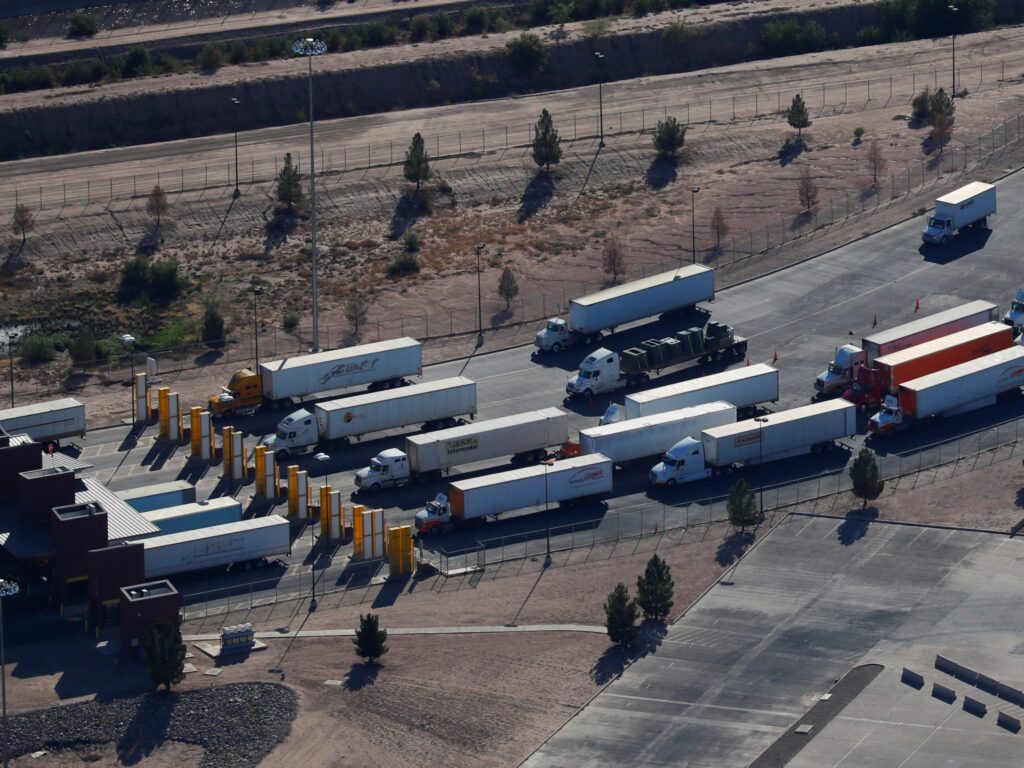
Federal immigration enforcement has entered the cab of the American trucker. In a striking development for the freight industry, U.S. Border Patrol agents arrested 36 commercial truck drivers during a five-day operation in Arizona — sending a clear signal that scrutiny of commercial drivers’ immigration and licensing status is intensifying at the federal level. [freightwaves]
Operation Checkmate: what happened
Between May 11–15, 2026, agents from the U.S. Border Patrol’s Yuma Sector conducted Operation Checkmate, resulting in 52 total arrests of individuals unlawfully present in the United States. Of those, 36 were actively operating semi-trucks at the time of the operation, according to U.S. Customs and Border Protection.
Of the 36 truck drivers arrested, 29 held commercial driver’s licenses (CDLs) issued by four states: California, New York, Washington, and Virginia. Thirty of the drivers were Indian nationals, with the remaining six coming from Mexico, El Salvador, and Russia.
A shifting regulatory landscape for CDLs
The Arizona arrests didn’t happen in a vacuum. They follow a major regulatory shift from the Federal Motor Carrier Safety Administration (FMCSA), whose revised rules on non-domiciled CDLs took effect on March 16, 2026. Under the updated framework, eligibility for non-domiciled CDLs is now limited to specific visa classifications, and states are required to strengthen identity and immigration verification procedures before issuing licenses.
Several major CDL-issuing states — including California, Washington, Colorado, Pennsylvania, and Ohio — have paused, reviewed, or modified their non-domiciled CDL programs in response to the new federal guidance. Texas, historically one of the largest issuers of non-domiciled CDLs nationally, has issued more than 51,000 such licenses over the past decade, according to an Overdrive analysis.
Beyond Arizona: a national enforcement pattern
Operation Checkmate is not an isolated case. In Oklahoma, the Highway Patrol’s yearlong “Operation Guardian” identified more than 600 truck drivers who were allegedly unlicensed, improperly trained, or in the country illegally. Investigators also uncovered drivers with active criminal warrants and what state officials described as fraudulent “pop-up” trucking schools improperly issuing CDLs — what Oklahoma’s Department of Public Safety Commissioner Tim Tipton called “a well-organized criminal network that’s done this to the trucking industry.”
What this means for freight operators
For carriers, brokers, and fleet managers, the trend is clear: verifying the immigration status and CDL legitimacy of commercial drivers is no longer a background compliance checkbox — it is an active enforcement priority. Companies relying on non-domiciled CDL holders should immediately audit their driver rosters against updated FMCSA eligibility rules and consult legal counsel to ensure full compliance.
As federal and state agencies continue to coordinate enforcement, the freight industry should expect increased roadside scrutiny, higher compliance costs, and potential disruptions to driver availability — particularly in states where non-domiciled CDL programs are under review.
FreightGraph.ai will continue monitoring developments in trucking compliance and CDL regulations as this story evolves.