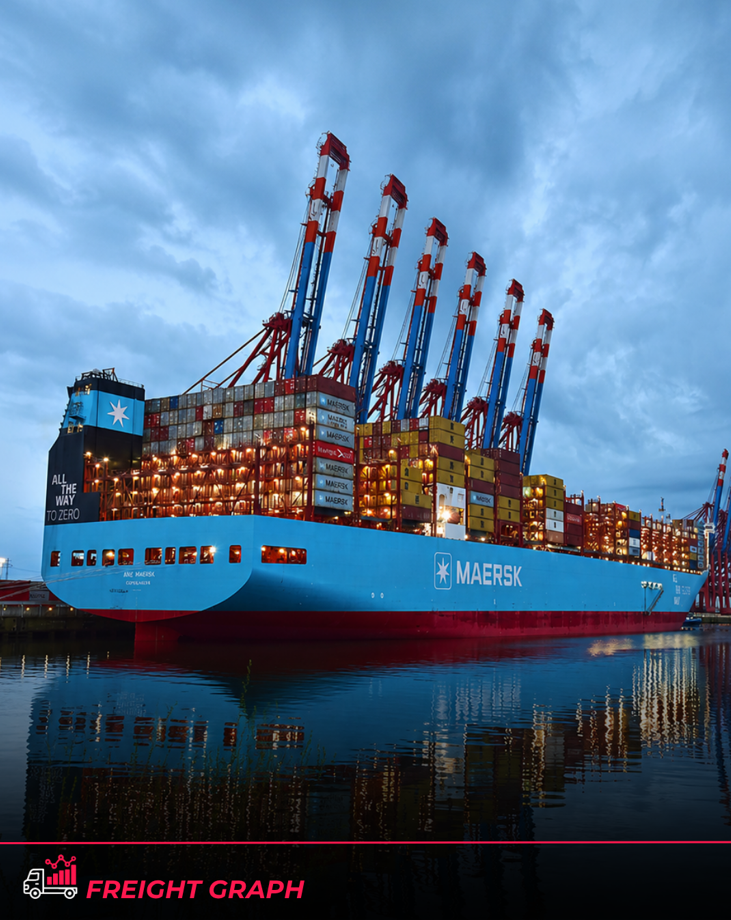
After months of rerouting vessels around the Cape of Good Hope, Maersk is preparing to send its first cargo through the Suez Canal since the start of the Iran war.
According to reports from the Financial Times and Reuters, Maersk plans to send the container vessel Maersk Majestic through the Suez Canal and the Red Sea, marking the company’s first transit through the corridor since the escalation of regional tensions and the Iran-related conflict in 2026.
The decision is being closely watched across the logistics industry because the Suez Canal is one of the world’s most critical maritime chokepoints, handling a significant share of trade between Asia and Europe. Since many carriers diverted vessels away from the Red Sea, global shipping networks have faced longer voyage times, higher fuel consumption, equipment imbalances, and elevated freight costs.
Maersk’s move does not necessarily mean a full-scale return of all services through the Suez Canal. However, it does represent an important test of whether carriers are gaining confidence in the security environment and whether normal routing patterns can gradually resume.
The Strategic Impact of Maersk’s Return to the Suez Canal
For nearly two years, the Red Sea security crisis has forced global container carriers to redesign their Asia–Europe service networks. The widespread diversion around the Cape of Good Hope significantly extended voyage distances, increased bunker consumption, reduced vessel availability, and created ongoing schedule disruptions across multiple trade lanes.
Against this backdrop, Maersk’s decision to send its first cargo through the Suez Canal represents more than a single voyage, it serves as an important market signal.
While the company has not announced a full restoration of all Suez services, the transit will be closely monitored by carriers, cargo owners, insurers, and freight forwarders worldwide.
A Potential Turning Point for Asia–Europe Shipping
The Suez Canal remains the shortest maritime corridor connecting Asian manufacturing hubs with European consumer markets.
When carriers abandoned the route, they were forced to sail thousands of additional nautical miles around southern Africa.
This operational shift created several industry-wide consequences:
- Longer transit times between Asia and Europe
- Higher fuel consumption per voyage
- Reduced effective vessel capacity
- Increased schedule unreliability
- Equipment imbalances across major ports
- Upward pressure on ocean freight rates
Even if only part of the industry’s capacity gradually returns to the Suez Canal, these pressures could begin to ease.
However, the pace of recovery will largely depend on continued regional stability and the confidence of shipping companies in the security environment.
Transit Time Could Become More Predictable
Since the beginning of the Red Sea disruptions, logistics planners have had to incorporate longer lead times into supply chain planning.
Diversions around Africa often required additional sailing days while also creating knock-on delays caused by schedule adjustments and vessel repositioning.
Should Suez Canal transits become more common again, businesses may benefit from:
- Improved schedule reliability
- Shorter average transit times
- Better inventory planning
- Reduced safety-stock requirements
- More accurate delivery forecasting
These improvements are particularly valuable for industries operating with lean inventory strategies or just-in-time production models.
Maersk’s planned return to the Suez Canal is a significant operational development for the global shipping industry, but it should be viewed as an early indicator rather than definitive evidence of a full market recovery.
Frequently Asked Questions (FAQ)
No. Based on the company’s announcement, Maersk is resuming transit on a limited basis while continuing to evaluate security conditions before making broader operational decisions.
Not necessarily. Freight rates are influenced by multiple market factors, including shipping capacity, demand, fuel costs, and network utilization. A single service resumption is unlikely to produce an immediate market-wide impact.
The Suez Canal provides one of the shortest maritime routes between Asia and Europe, reducing sailing distance, transit time, and fuel consumption compared with alternative routes around southern Africa.
Sources