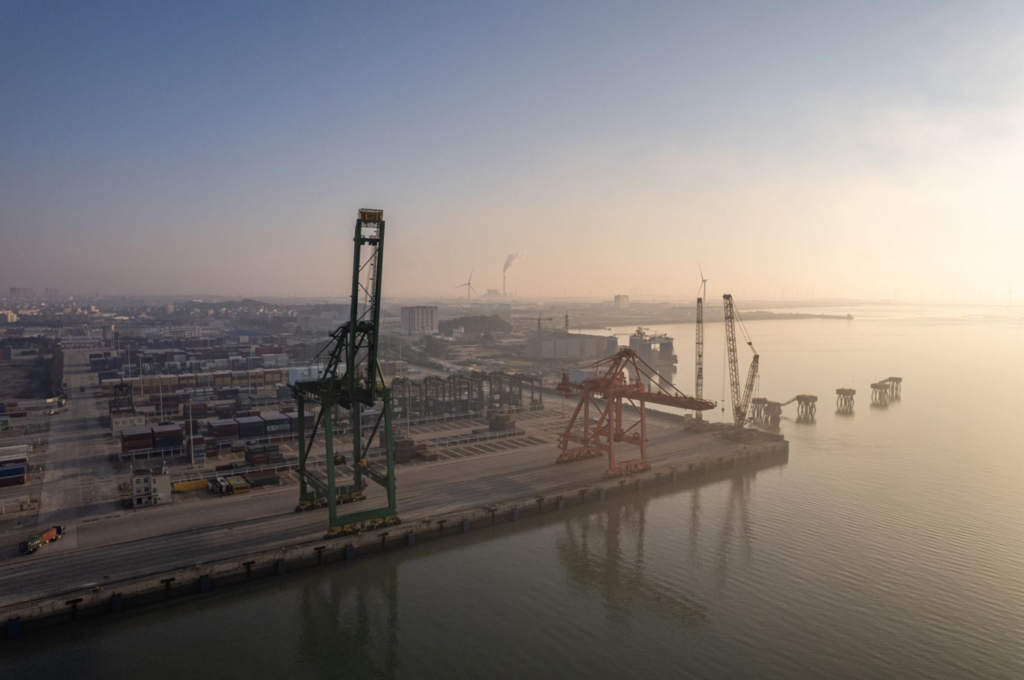
Global Container Market Tightens as Early Peak Season Demand Meets Capacity Management
Global container shipping markets are entering the second half of 2026 with renewed volatility, driven by a combination of early peak-season demand, carrier capacity management strategies, and ongoing geopolitical uncertainty affecting key maritime routes.
Despite continued disruptions in several global corridors, overall container volumes have remained relatively stable. However, this stability is increasingly masking a tightening imbalance between available vessel capacity and rising pricing power among major carriers.
Spot Rates Strengthen Across Key Trade Lanes
Recent market data shows a clear upward shift in spot rates across major east–west trade lanes:
- Asia–US West Coast rates have increased as carriers implement tighter space control and introduce general rate increases (GRIs).
- Asia–Europe routes have also seen volatility, with week-to-week increases reported in some cases as demand and capacity fluctuate.
- Market conditions remain highly responsive to blank sailings, schedule adjustments, and dynamic vessel deployment strategies.
While rate increases vary by carrier and specific service, the overall trend reflects tightening capacity conditions rather than uniform price spikes across the market.
Geopolitical and Operational Factors Continue to Disrupt Efficiency
Ongoing geopolitical instability and regional conflicts continue to influence global shipping routes and operational costs:
- Security risks in parts of the Middle East have led to increased caution in routing decisions.
- Disruptions near key maritime corridors have contributed to longer voyage times and reduced fleet efficiency.
- Rising insurance premiums and war-risk surcharges are adding cost pressure across certain trade lanes.
These factors do not necessarily remove physical vessel capacity, but they reduce effective capacity by increasing transit times and operational inefficiencies.
Structural Volatility Persists
Industry forecasts suggest that volatility is likely to remain a defining feature of the container shipping market through 2026:
- Even in scenarios where overall rates moderate, pricing is expected to remain highly event-driven.
- Carrier capacity management continues to play a key role in balancing supply and demand, particularly during seasonal demand peaks.
- Structural inefficiencies in routing and scheduling are offsetting parts of global fleet expansion.
As a result, the market is expected to move in cycles of tightening and easing rather than following a stable or predictable trend.