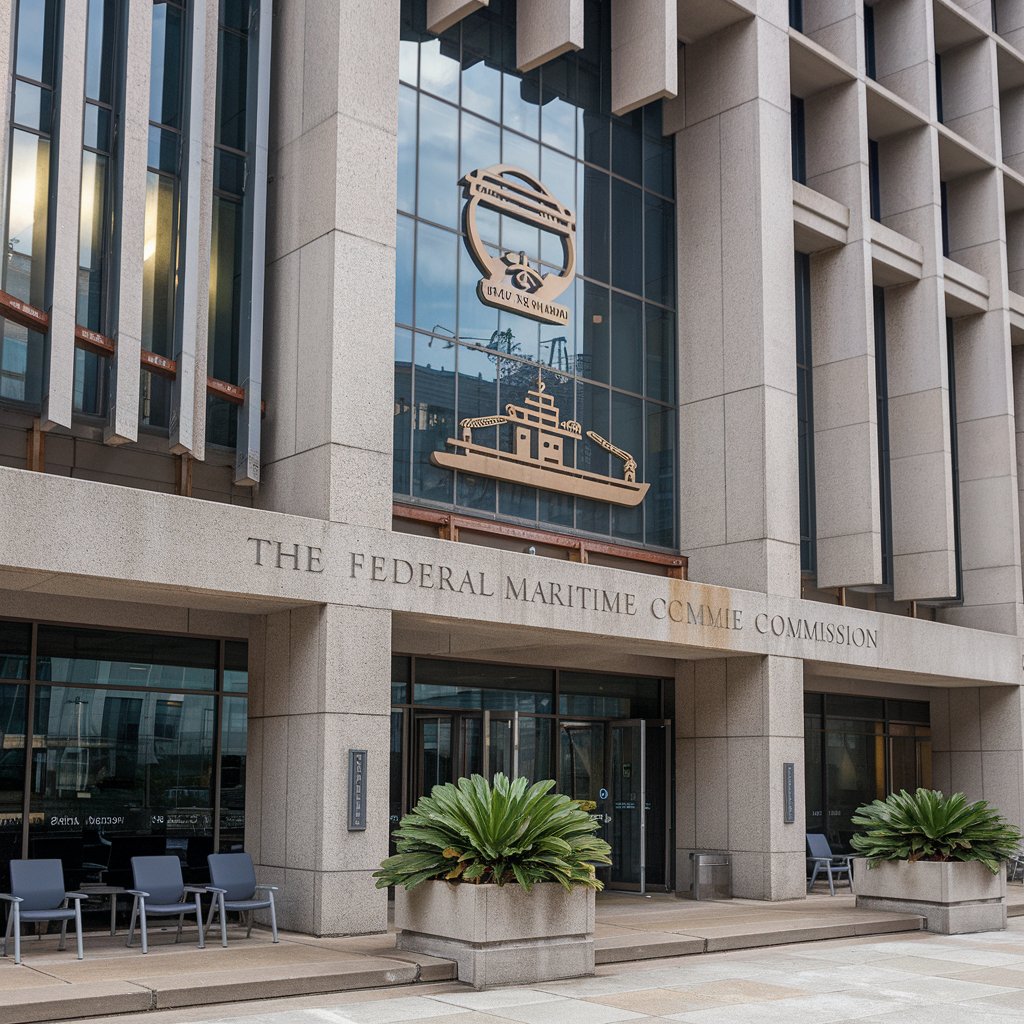
The Federal Maritime Commission (FMC) is operating at full capacity once again. On June 1, Robert J. Harvey of Florida was sworn in as a Commissioner of the Federal Maritime Commission. The move ends a prolonged vacancy that had left the five-member regulatory panel short-staffed for over a year. [MarineLink]
Harvey was nominated by President Trump on September 3, 2025, to serve on the Commission for a term expiring on June 30, 2029. The United States Senate confirmed his nomination on May 18, 2026, and President Trump appointed him to the Commission on May 28, 2026.
A Florida Hat Trick for Trump’s FMC
Harvey’s appointment marks the third consecutive FMC pick from Florida by the Trump administration. He joins Chair Laura DiBella and former chair Louis Sola — both Florida-connected appointees — giving the Sunshine State an outsized influence over U.S. maritime regulatory affairs.
Harvey’s Background
A U.S. Navy veteran and former Special Assistant U.S. Attorney, Harvey’s maritime career began when he served as a Lieutenant Commander in the Judge Advocate General’s Corps, providing legal counsel on military justice, administrative law, federal law enforcement, and naval law.
Harvey previously served as the President and Executive Director of the Florida Opportunity Fund, a not-for-profit corporation investing in Florida-based start-up companies in life sciences, information technology, advanced manufacturing, aviation and aerospace, homeland security and defense, as well as other technology sectors strategic to Florida. He also served as the Executive Director of the Florida Development Finance Corporation, the statewide conduit issuer created by the legislature to issue tax-exempt and taxable bonds for the purpose of promoting economic development.
Why It Matters for Shippers
The FMC has been operating at minimum quorum since mid-2025, following the departures of Louis Sola and Carl Bentzel. A fully staffed commission means faster decisions, stronger enforcement capacity, and a more proactive stance on pressing issues — from ocean carrier billing practices to the IMO’s emissions framework. [Kuehne-nagel]
The FMC possesses far-reaching authority: it can block a country’s vessels from entering U.S. ports, restrict cargo flows, or impose fines that reach $2.4 million per port call. With a full bench now seated, shippers and carriers should expect heightened regulatory scrutiny across U.S. foreign trade lanes.
Commission Makeup
Harvey joins the FMC at a critical time with key issues at the forefront, including the U.S. position against the IMO’s Net Zero emissions trading scheme. Republicans now hold a 3-2 majority: DiBella, Harvey, and longtime member Rebecca Dye on one side; Democrats Daniel Maffei and Max Vekich on the other.