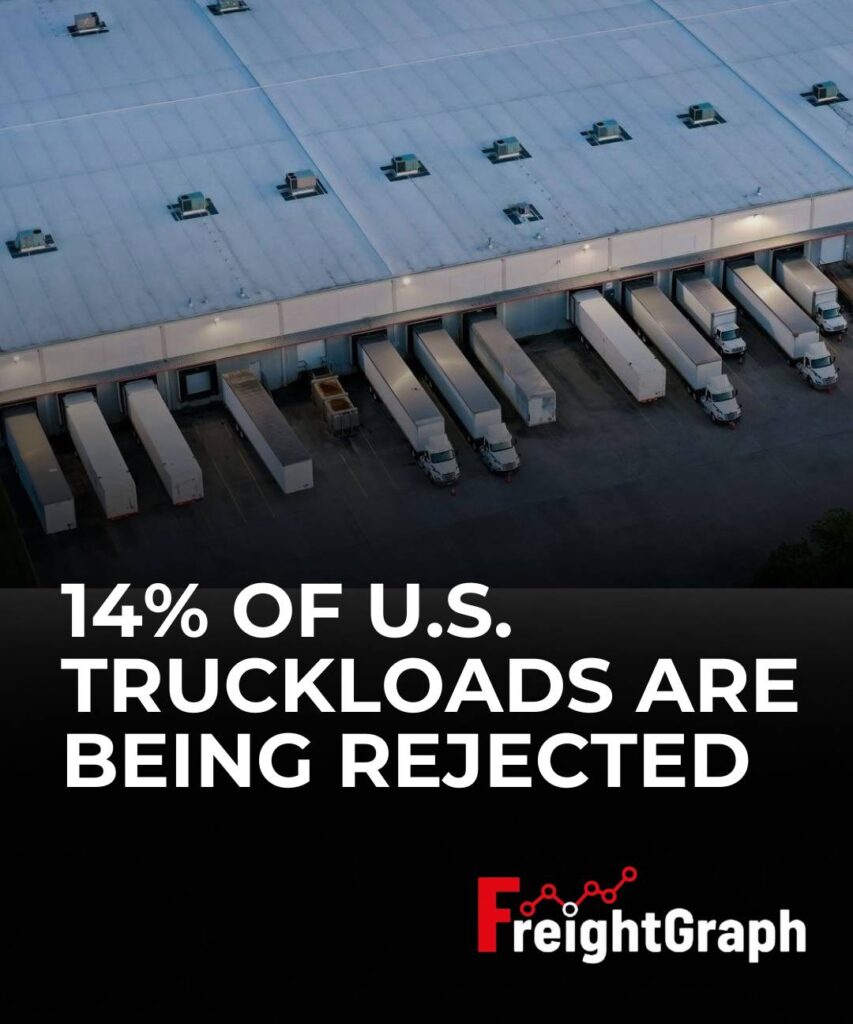
The U.S. truckload market is showing renewed signs of tightening, with national van tender rejections holding near 14%. Dry van represents a major share of U.S. tendered freight, making sustained changes in rejection levels an important indicator of broader truckload capacity conditions.
What makes the current movement particularly notable is that capacity not a major surge in demand appears to be driving much of the pressure. When available trucking capacity becomes more fragile, carriers can become increasingly selective about contracted loads, potentially pushing more freight toward alternative carriers and the spot market.
For shippers and brokers, this makes lane-level visibility increasingly important. Teams should monitor rejection trends, maintain backup carrier options, and watch spot-market exposure especially as Q4 approaches. For carriers, tighter markets can create more freight options, although conditions can vary significantly between lanes and regions.
The next signal to watch is whether rejection rates remain elevated and whether spot rates begin responding to tighter capacity. For freight teams heading into Q4, the takeaway is straightforward: don’t watch demand alone watch capacity.