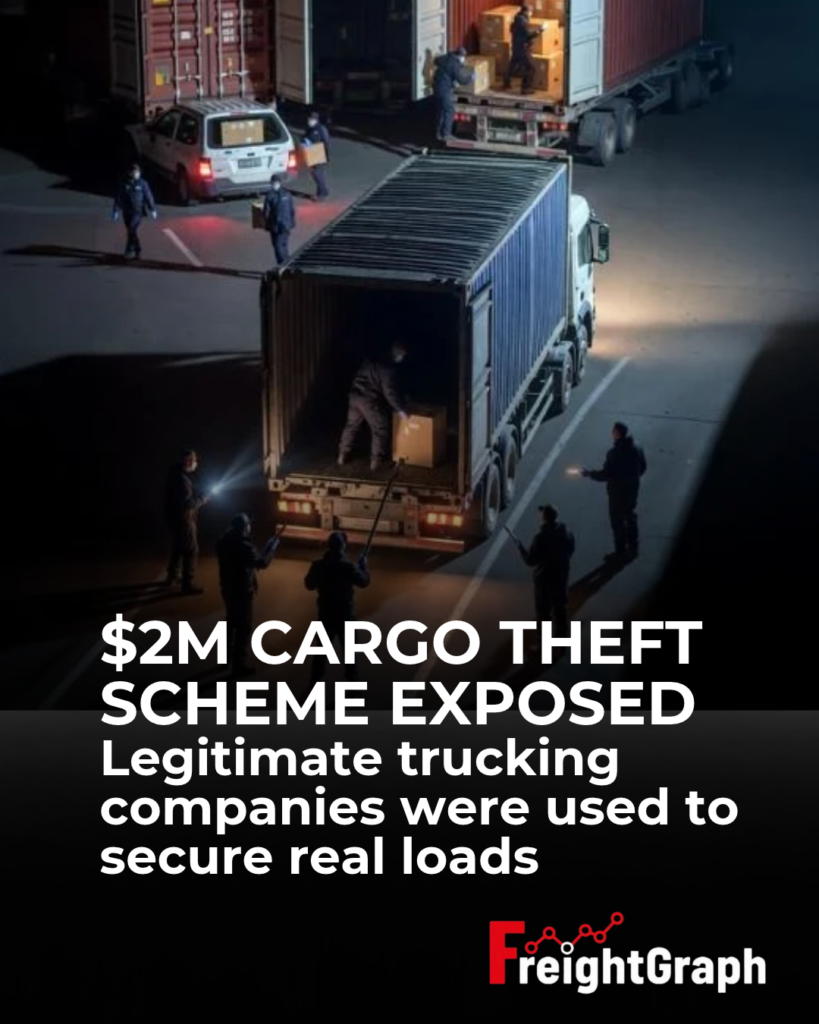
$2M Cargo Theft Scheme Exposed After Legitimate Trucking Companies Were Used to Steal Freight
A federal jury in Los Angeles has convicted two men for participating in a cargo theft scheme that caused at least $2 million in estimated losses. According to the U.S. Department of Justice, the operation ran from March 2024 through June 2025 and involved purchasing or fraudulently using legitimate trucking companies to bid on authentic shipping contracts. Once loads were secured, cargo was collected from warehouses but never delivered to its intended destination. Stolen freight included televisions, laptops, appliances, solar panels, vacuums, LED lights, shoes and tires.
One example shows why the case is particularly relevant to the freight industry. Prosecutors said an established Texas carrier, Z&F Transportation LLC, was purchased for approximately $22,000 in March 2024. Later that month, a load of televisions was picked up in Fontana, California, under the carrier’s name for delivery to Florida — but never arrived. In May, co-conspirators acquired another carrier, Skyways Trucking LLC, which prosecutors said was subsequently used to steal loads containing laptops, televisions, solar panels and other merchandise. Loads were booked through freight brokers, including Uber Freight.
For brokers, shippers and logistics companies, the case highlights a difficult freight-security problem: a carrier can appear established while control of the business behind that identity has changed. The convictions themselves do not establish how widespread this technique is, but this case demonstrates how legitimate carrier identities can be exploited to gain access to valuable freight. Both defendants are scheduled to be sentenced on January 20, 2027; the statutory maximums are 20 years for one defendant and five years for the other, though those are maximum penalties rather than the sentences the court will necessarily impose.