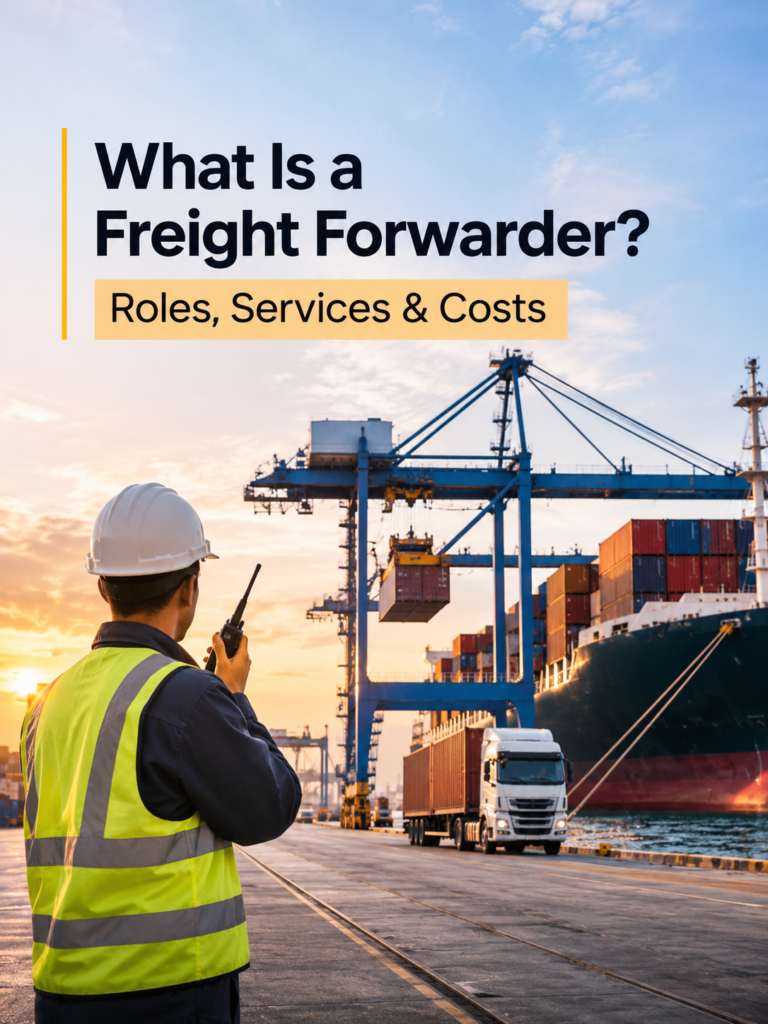
International shipping involves much more than moving goods from one country to another. Businesses must coordinate transportation, manage shipping documents, handle customs requirements, compare freight rates, and make sure cargo reaches its destination on time.
This is where freight forwarders play an important role.
Whether a company imports products, exports raw materials, or manages a global supply chain, understanding freight forwarding can help reduce operational complexity and make shipping decisions more efficient.
In this guide, we explain what a freight forwarder is, what they do, how freight forwarding works, what services they provide, and how businesses can choose the right freight forwarding partner.
What Is a Freight Forwarder?
A freight forwarder is a company or logistics professional that organizes and coordinates the transportation of goods from one location to another, often across international borders.
Freight forwarders work with shipping lines, airlines, trucking companies, rail operators, customs brokers, and warehouses to arrange cargo transportation.
Rather than operating every vehicle or vessel themselves, freight forwarders coordinate different transportation providers to create an efficient shipping solution.
Their responsibilities may include:
- Arranging air, sea, rail, and road transportation.
- Coordinating cargo pickup and delivery.
- Preparing and managing shipping documentation.
- Assisting with customs clearance.
- Consolidating shipments from multiple customers.
- Comparing transportation routes and freight rates.
- Arranging cargo insurance when requested.
- Tracking shipments and communicating delivery updates.
In simple terms, a freight forwarder helps businesses move goods between suppliers, manufacturers, warehouses, and customers while coordinating the different parties involved in the process.
What Does a Freight Forwarder Do?
The main responsibility of a freight forwarder is to organize the movement of cargo efficiently.
However, the exact services depend on the shipment, destination, transportation method, and customer’s requirements.
Here are the most common responsibilities.
1. Transportation Planning
Freight forwarders evaluate different transportation options based on cost, delivery time, cargo type, and destination.
For example, air freight may be suitable for urgent shipments, while ocean freight is often more economical for large volumes of cargo.
2. Freight Rate Negotiation
Freight forwarders work with multiple transportation providers to obtain shipping rates and compare available services.
Comparing different carriers and routes helps businesses make better decisions about transportation costs and delivery schedules.
3. Customs Documentation
International shipments require accurate documentation.
Depending on the shipment and destination, documents may include:
- Commercial Invoice
- Packing List
- Bill of Lading
- Air Waybill
- Certificate of Origin
- Export or Import Declarations
Freight forwarders help coordinate the required documents and work with customs brokers when customs clearance services are needed.
4. Cargo Consolidation
When businesses do not have enough cargo to fill an entire shipping container, a freight forwarder may combine shipments from multiple customers.
This is commonly known as Less Than Container Load (LCL) shipping.
Consolidation can help businesses reduce transportation costs by sharing available cargo space.
5. Shipment Tracking and Coordination
Freight forwarders coordinate shipment updates between carriers, suppliers, warehouses, and customers.
Tracking cargo movements helps businesses identify delays, communicate changes, and plan their next operational steps.
How Does Freight Forwarding Work?
Freight forwarding usually involves several stages, from the initial shipping request to final delivery.
Although the process varies depending on the shipment, a typical international freight forwarding operation follows these steps:
Step 1: Receiving the Shipping Request
The shipper provides essential shipment information, including:
- Pickup and delivery locations
- Cargo description
- Weight and dimensions
- Required delivery date
- Preferred transportation method
The freight forwarder reviews the information and identifies suitable shipping options.
Step 2: Choosing the Transportation Method
The forwarder compares available transportation methods and routes.
The decision usually depends on delivery urgency, shipping budget, cargo characteristics, and destination.
Step 3: Booking Cargo Space
After the shipper approves the quotation, the freight forwarder coordinates with the selected carrier to reserve cargo space.
Step 4: Preparing Shipping Documents
The necessary shipping and customs documents are collected and reviewed.
Incorrect information can lead to customs delays, additional charges, or shipment complications.
Step 5: Cargo Pickup and Transportation
The goods are collected from the supplier or designated location and transported to the departure port, airport, or terminal.
The cargo then moves through the selected transportation network.
Step 6: Customs Clearance
Depending on the shipment arrangement, the freight forwarder coordinates customs documentation and works with the relevant customs broker or authorities.
Step 7: Final Delivery
After the cargo arrives and the required procedures are completed, the shipment is arranged for delivery to the consignee or final destination.
What Are the Main Types of Freight Forwarding?
Freight forwarding services are generally organized around the transportation method used to move cargo.
Air Freight Forwarding
Air freight is commonly used for urgent, high-value, or time-sensitive shipments.
Advantages:
- Faster international transportation.
- Suitable for smaller and valuable shipments.
- Frequent connections between major airports.
Limitations:
- Higher transportation costs.
- Restrictions on cargo dimensions and certain goods.
- Additional handling and security requirements.
Ocean Freight Forwarding
Ocean freight is widely used for international trade, particularly for large shipments and containerized cargo.
Two common shipping options are:
- FCL (Full Container Load): The shipper books an entire container for their cargo.
- LCL (Less Than Container Load): Cargo from multiple shippers is consolidated into one container.
Ocean freight is often more economical for large shipments, although transit times are generally longer than air freight.
Road Freight Forwarding
Road freight is commonly used for domestic transportation and cross-border shipping between neighboring countries.
It offers flexibility for pickup and delivery and can connect warehouses, ports, distribution centers, and customers.
Rail Freight Forwarding
Rail freight is used to transport cargo over long distances through railway networks.
It can be a practical option for certain international trade routes, particularly where established rail corridors connect major logistics hubs.
Freight Forwarder vs. Freight Broker: What’s the Difference?
Freight forwarders and freight brokers both help arrange transportation, but their responsibilities and legal roles can differ.
| Freight Forwarder | Freight Broker |
|---|---|
| Organizes shipments and logistics services | Arranges transportation between shippers and carriers |
| May consolidate and handle cargo | Typically acts as an intermediary |
| May coordinate documentation and customs services | Focuses primarily on arranging transportation |
| May assume contractual responsibility for transportation | Responsibility depends on the applicable agreement and law |
In the United States, the Federal Motor Carrier Safety Administration (FMCSA) distinguishes freight brokers from freight forwarders based on their regulatory roles and responsibilities.
The distinction is important because the two services are not interchangeable in every situation.
How Much Does Freight Forwarding Cost?
Freight forwarding costs depend on several factors. There is no single price that applies to every international shipment.
The total cost may include transportation charges, handling fees, documentation, customs-related services, and other operational expenses.
Some of the most important factors affecting freight forwarding costs include:
1. Transportation Method
Air, ocean, road, and rail freight have different pricing structures.
2. Cargo Weight and Dimensions
Shipment weight and volume can directly affect transportation charges.
3. Shipping Distance
Longer routes and additional transportation stages may increase the total cost.
4. Cargo Type
Fragile, oversized, hazardous, refrigerated, or specially handled cargo may require additional services.
5. Customs Duties and Taxes
Import duties, taxes, inspections, and customs-related expenses depend on the goods and destination country’s regulations.
6. Additional Services
Warehousing, cargo insurance, packaging, cargo handling, and final delivery may add to the total cost.
Before choosing a freight forwarding service, businesses should request a detailed quotation and understand which services and charges are included.
How to Choose the Right Freight Forwarder
Choosing a freight forwarding partner is an important decision for businesses involved in international trade.
The right partner can help simplify shipping operations, improve communication, and reduce avoidable delays.
Consider these factors before making a decision:
1. Industry Experience
Look for a freight forwarder with experience handling your type of cargo, destination, and transportation requirements.
2. Global Network
A reliable international network can make it easier to coordinate shipments across different countries and transportation providers.
3. Transparent Pricing
Compare quotations carefully. A lower initial rate does not always mean a lower final shipping cost.
4. Documentation and Customs Knowledge
Accurate documentation and familiarity with customs procedures are essential for international shipments.
5. Communication and Shipment Visibility
Choose a partner that provides clear updates and makes shipment information accessible when needed.
6. Technology and Operational Efficiency
Modern freight operations involve large amounts of information, including quotations, shipment records, invoices, carrier details, and delivery updates.
A freight forwarder that uses effective digital tools can organize information more consistently and improve coordination across daily operations.
Common Challenges in Freight Forwarding
Even well-organized freight operations can face unexpected challenges.
Some of the most common include:
Shipment Delays: Weather conditions, port congestion, carrier schedules, and customs inspections can affect delivery times.
Documentation Errors: Incorrect cargo descriptions, quantities, weights, or shipping details can cause delays and additional costs.
Changing Freight Rates: Transportation prices can change due to fuel costs, capacity availability, demand, and route conditions.
Limited Shipment Visibility: When shipment information is spread across emails, spreadsheets, messages, and different systems, tracking operational progress becomes difficult.
Communication Gaps: Poor coordination between shippers, carriers, warehouses, and customers can create unnecessary confusion.
Managing these challenges requires accurate information, clear communication, and organized operational processes.
How Technology Is Changing Freight Forwarding
Technology is becoming an increasingly important part of modern freight forwarding.
Logistics companies handle information from multiple sources every day. Managing this information manually can consume time and make it harder to identify errors, compare performance, and make informed decisions.
Digital logistics tools help companies organize operational data, improve information visibility, and reduce repetitive administrative work.
Some important developments include:
- Digital Documentation: Managing shipping documents electronically.
- Automated Data Capture: Extracting information from freight documents, invoices, and other operational records.
- Shipment Visibility: Making shipment information easier to access and monitor.
- Data Analytics: Using operational data to identify patterns, compare costs, and evaluate performance.
- Workflow Automation: Reducing repetitive manual tasks and improving consistency.
For freight forwarders handling a growing number of shipments, better data management can make a meaningful difference in daily operations.
This is where Freight Graph comes in.
Freight Graph helps logistics teams capture freight data, structure it automatically, and turn fragmented operational information into usable insights.
By making freight information easier to organize and analyze, logistics teams can spend less time dealing with scattered data and more time improving their operations.
Final Thoughts
Freight forwarding is an essential part of international trade. It connects shippers, carriers, customs services, warehouses, and other logistics providers to help goods move between countries.
Understanding how freight forwarding works allows businesses to make better transportation decisions, manage shipping costs, prepare accurate documentation, and improve supply chain coordination.
As logistics operations become more complex, having access to organized and reliable information is becoming just as important as choosing the right transportation provider.
Businesses that combine experienced logistics partners with effective digital tools are better positioned to manage their shipping operations and respond to changing requirements.
Frequently Asked Questions (FAQs)
What is the main purpose of a freight forwarder?
The main purpose of a freight forwarder is to organize and coordinate cargo transportation, including carrier arrangements, shipping documentation, and related logistics services.
Does a freight forwarder own trucks or ships?
Not necessarily. Many freight forwarders coordinate transportation through third-party carriers rather than operating their own vehicles or vessels.
What is the difference between a freight forwarder and a shipping company?
A shipping company typically operates transportation services or vessels, while a freight forwarder organizes shipments and coordinates transportation across different providers.
What documents are required for freight forwarding?
Common documents include commercial invoices, packing lists, bills of lading, air waybills, and certificates of origin. Requirements depend on the cargo, route, and destination.
Is freight forwarding the same as logistics?
No. Freight forwarding is one part of the broader logistics industry. Logistics can also include inventory management, warehousing, distribution, procurement, and supply chain planning.
How do freight forwarders make money?
Freight forwarders may earn revenue through service fees, transportation arrangements, handling charges, documentation services, and other agreed logistics services.
Why is technology important in freight forwarding?
Technology helps freight forwarders organize shipment information, manage documentation, improve visibility, automate repetitive tasks, and make better operational decisions.
References and further reading
DHL Global Forwarding – Freight Shipping GlossaryFIATA – About Freight Forwarding
FMCSA – Definitions of Motor Carrier, Broker and Freight Forwarder